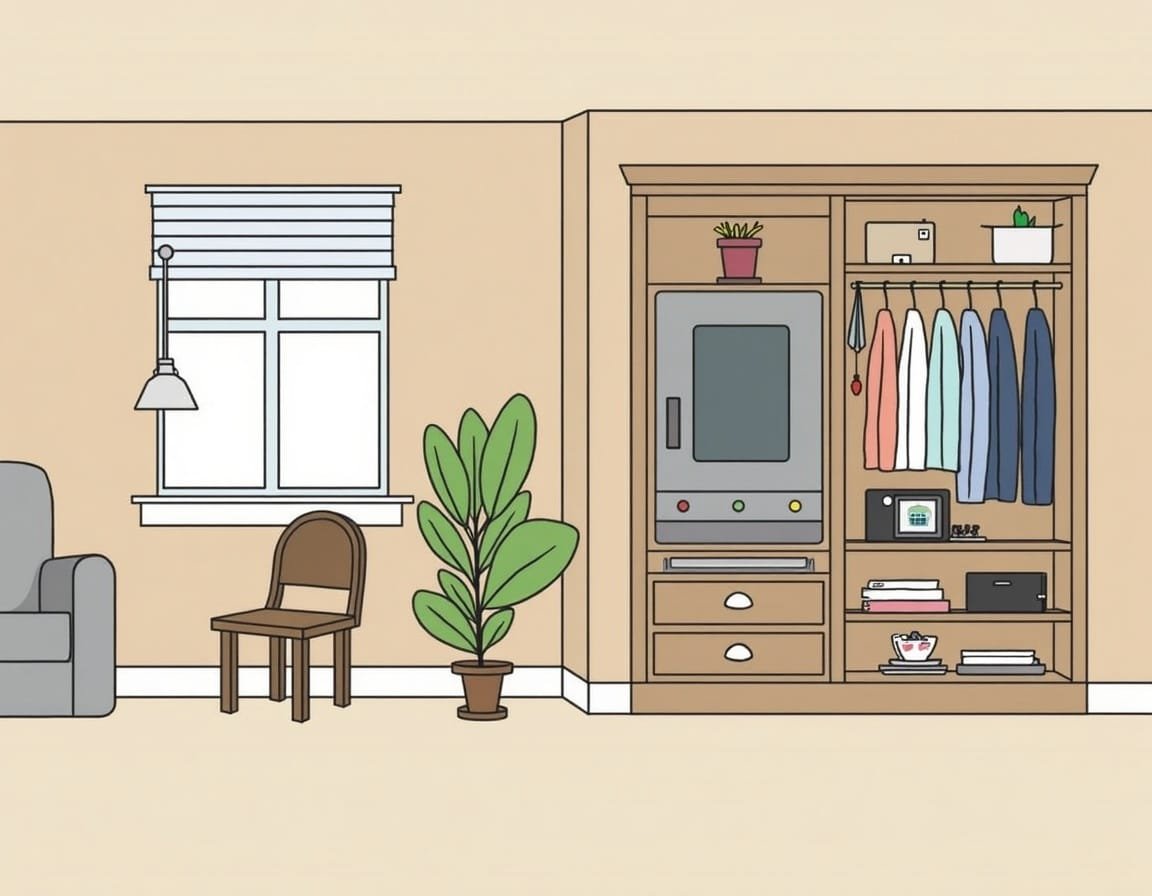
Discover overlooked storage areas in your home and learn practical ways to organize everyday items, reduce clutter, and make each room work harder.
Table of Contents
Surface clutter often comes from everyday items that do not have a convenient home nearby. Rather than adding large furniture or planning a renovation, it can be useful to look at the gaps, doors, walls, and furniture already in place. A cabinet door, narrow appliance gap, or unused section of wall may hold the small items that repeatedly end up on counters, tables, or floors.
The best storage ideas are not simply hidden away. They keep frequently used belongings visible enough to remember, easy to reach during a routine, and simple to return afterward. Those standards can help turn overlooked areas into practical storage that reduces small daily frustrations.
Start With the Items That Create Daily Clutter
Watch for a few ordinary days to see what repeatedly gathers on counters, tables, floors, or chairs. The best candidates for unconventional storage are often items used frequently that lack a consistent, nearby home: bags, mail, cleaning products, charging cords, toiletries, or laundry supplies.
Before assigning a new spot, consider how often the item is needed, who needs to reach it, and whether the location is safe and appropriate for its use. A storage area should also fit the routine—for example, keeping reusable bags near the exit rather than in a distant closet. If returning an item is not as convenient as leaving it out, the system is unlikely to last.
The Inside of Cabinet and Closet Doors
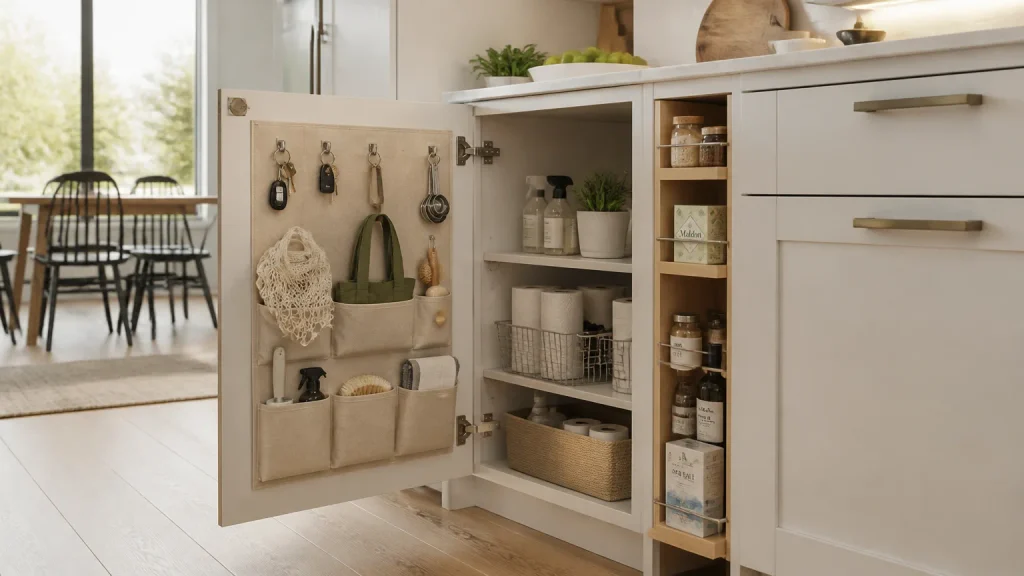
The inside face of a cabinet or closet door can hold small items used as part of a regular routine. Door-mounted organizers, hooks, slim racks, and pocket systems can keep cleaning supplies, food wraps, toiletries, accessories, or small tools contained and close to where they are needed. A kitchen cabinet door might hold wraps or cleaning cloths, while a bathroom door can organize toiletries and a utility closet door can keep lightweight cleaning supplies in view.
Before installing anything, check the depth of both the organizer and its contents to ensure the door closes fully. Keep heavy, bulky, or awkward items out of door-mounted storage, since they can strain hinges or make access less convenient.
The Vertical Space Above Doors
The high wall space above interior doors can hold items that do not need daily access. A shallow shelf or labeled bins may be useful for infrequently used linens, seasonal items, or spare household supplies. Choose containers with clear, easy-to-read labels so their contents can be identified from below rather than forgotten. Install shelving and hardware securely, and avoid overloading the area. Keep stored items light enough and manageable enough to retrieve safely when needed, using an appropriate step stool if necessary.
The Narrow Gap Beside the Refrigerator
A narrow gap beside the refrigerator may accommodate a slim rolling cart or pull-out organizer for compact items used in the kitchen. Depending on the location and household routine, it can hold canned goods, spices, reusable bags, or, where suitable, cleaning products. Measure the gap’s width, depth, and usable height before choosing an organizer, including room to pull it out comfortably. Not every space beside a refrigerator is available for storage: maintain the appliance’s required ventilation clearance and avoid blocking access needed for cleaning or service.
The Space Between Appliances
A narrow gap between a washer and dryer, or beside other laundry equipment, can support a slim rolling cart that keeps routine supplies within reach. Use it for detergent, stain-treatment supplies, clothespins, or similar lightweight items that are easiest to return immediately after use. A movable organizer is often the most practical choice because it can be pulled out when needed and rolled away afterward. Measure carefully, and do not block walkways, appliance doors, utility connections, or the access needed for cleaning and routine appliance use.
The Area Under the Sink
Plumbing can make the space under a kitchen or bathroom sink awkward, but organizers designed around pipes can turn it into useful storage. Stackable drawers, tension rods, and small bins help separate supplies without forcing everything into one crowded compartment. Place frequently used items, such as dish soap or everyday cleaning products, at the front where they are easiest to see and reach. Keep backup products together in a separate, contained area toward the back or side. Leave enough open space to remove and return each item easily. A restrained setup is more practical than filling every available inch.
Toe-Kick and Low-Cabinet Zones
Where cabinetry design permits, the shallow space at the base of kitchen or bathroom cabinets can store flat, occasional-use items such as baking sheets, pet bowls, or cleaning cloths. Simple add-on organizers may help make an existing low cabinet easier to use, but true toe-kick storage generally involves modifying cabinetry and requires more advance planning. Because these zones are low and less convenient to reach, reserve them for items that do not need constant retrieval.
The Side Panels of Cabinets and Furniture
Exposed cabinet ends, bookcase sides, and other furniture panels can serve as compact storage surfaces near the point of use. Add low-profile hooks for towels or bags, a small rail for measuring tools, or a narrow mounted organizer for charging cords. In a kitchen, for example, measuring tools can stay close to the work area without taking up drawer space. Choose options that do not extend into walking paths or create snag points. Match mounting hardware to the surface and the weight of the items being stored.
The Wall Behind a Door
The wall concealed when a door is open can provide contained storage without adding clutter to the room. Over-the-door organizers or narrow wall-mounted hooks, pockets, and racks can hold bedroom accessories, bathroom toiletries, pantry supplies, or utility-area cleaning cloths and lightweight tools. Keep the system limited to items that suit the room and remain within the hidden wall area. Before installation, test the full door swing and make sure stored items will not strike adjacent walls or furniture. Use protective pads or appropriate hardware to help prevent scuffs and surface damage.
Under-Bed Space That Is Easy to Access
Under-bed space works best when its contents are contained, organized, and simple to pull out. Low-profile rolling bins are useful for seasonal clothing or extra bedding that needs occasional access, while divided containers can keep hobby materials separated and easier to find. Vacuum storage bags may help contain bulky seasonal textiles when they will be stored for longer periods. Reserve the deepest or least convenient areas for items that are rarely retrieved. Belongings used more regularly should go in lightweight containers that slide out easily, so they can be returned without turning under-bed storage into a forgotten catchall.
The Back of Sofas and Other Large Furniture
The narrow area behind a sofa or other large furniture can contain living-room essentials that otherwise collect on cushions and nearby tables. A slim console table may provide a surface for remotes, reading materials, and chargers, while behind-sofa caddies or narrow baskets can hold blankets and smaller accessories. Measure the available depth before choosing a solution, and keep it proportional to the space. Most importantly, preserve clear walking room so the added storage supports everyday use rather than making the room feel crowded.
Unused Wall Height in Closets
Closets often have unused space above the main shelf or hanging rod. A second shelf, shelf risers, hanging organizers, or labeled upper bins can expand storage without increasing the closet footprint. Keep the items used most often within comfortable reach, including everyday clothing, bags, or routine supplies. Use the highest shelves for less frequently needed possessions, such as seasonal accessories, spare linens, or stored keepsakes. Clear labels are especially useful for upper bins, allowing you to identify contents without repeatedly pulling containers down to check what is inside. Assigning each vertical zone by frequency of use keeps the closet more practical over time.
Stair Landings and the Space Beneath Stairs
Stair landings and the area beneath stairs can offer storage without adding furniture elsewhere. A landing may accommodate a basket or shallow shelf, but only if it does not narrow circulation or interfere with safe passage. Beneath stairs, shallow shelves, cabinets, built-ins, or a compact utility zone can contain household supplies, shoes, or other items suited to the location. Movable baskets are a simple starting point. Permanent work requires careful planning, since structural, code, and access considerations may apply around or below stairs.
Window-Sill and Window-Adjacent Areas
Deep window sills or nearby narrow shelves can provide a modest landing place for small plants, keys, mail trays, or other lightweight household essentials. Keep the setup proportional to the available sill depth and surrounding clearance, rather than treating it as general storage. Nothing placed there should block natural light, vents, exits, window operation, or the practical use of the window. A small, contained arrangement is usually easier to maintain.
Create a System That Stays Easy to Maintain
Unconventional storage works best when each space has one clear purpose. Group items by the task they support, such as laundry, meal preparation, or leaving the house, and label bins so everyone can return items to the same place. Reserve high, deep, or otherwise hard-to-reach areas for belongings used less often. Occasionally review items that start collecting outside their assigned homes; this can show that a location is inconvenient or no longer fits the routine. A simple room-by-room list, including an optional AI-assisted list, can help map frequently used items to logical locations. A small number of well-matched storage homes is more useful than filling every empty space.