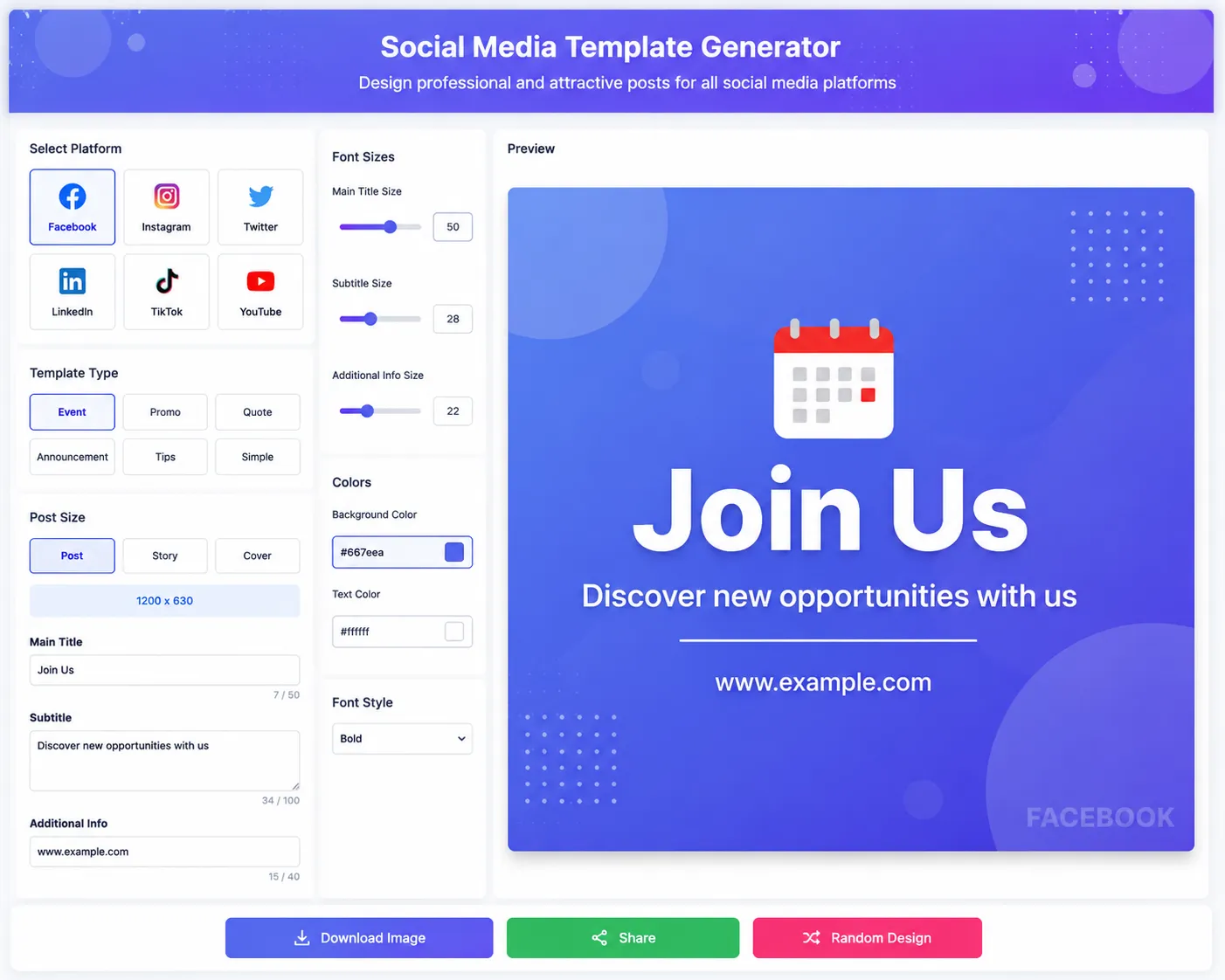
Create and share custom social media graphics, templates, and posts for free with bestis1’s easy-to-use online social media content creator.
Social Media Template Generator
Design professional and attractive posts for all social media platforms
Table of Contents
Introduction to Social Media Templates
Social media templates serve as strategic tools that not only streamline your content creation process but also reinforce your brand identity. By providing a consistent visual framework, these templates help differentiate your brand in a crowded digital landscape.
Each element, from color schemes to typography, can be tailored to enhance brand image, attracting engagement and loyalty from your audience.
Moreover, utilizing templates encourages creativity within confines, allowing for quick adaptations without sacrificing quality. This balance between structure and flexibility enables brands to maintain authenticity while experimenting with new formats and messaging.
When designed effectively, social media templates become more than mere guidelines; they transform into a canvas for storytelling, reflecting the values and personality of your brand.
Embracing this approach not only amplifies your online presence but also ensures a cohesive experience for your audience across various platforms.
Benefits of Using Social Media Templates
Social media templates serve as powerful branding tools that can significantly enhance your brand image.
By maintaining consistent visuals and messaging, templates ensure that every post aligns with your overall branding strategy, making your content immediately recognizable. This uniformity not only builds credibility with your audience but also reinforces your brand identity across various platforms.
Furthermore, social media templates streamline the content creation process. Instead of starting from scratch for every post, marketers can quickly customize pre-designed layouts to suit specific campaigns or announcements.
This efficiency allows for more time to focus on strategic planning and engaging with followers, ultimately leading to a more vibrant online presence. By incorporating eye-catching graphics and cohesive color schemes, templates also invite creativity, empowering brands to experiment while staying true to their established voice.
Identifying Your Brand’s Visual Style
Identifying your brand’s visual style is a pivotal step in achieving design consistency across your social media platforms. This involves distilling the essence of your brand into a cohesive aesthetic, including color palettes, typography, and imagery.
Consider your target audience and what colors or styles resonate with them; for instance, vibrant hues may attract a younger demographic, while muted tones might appeal to professionals.
Creating a mood board can help you visualize these elements together, ensuring they align with your overall brand message.
Moreover, enhancing your brand image involves making thoughtful choices that reflect your core values. Every visual element should tell a story, whether through evocative imagery or consistent logo placement. Remember, the real power of a well-defined visual style lies in its ability to foster recognition and trust.
When users see your content, they should instantly know it’s yours, reinforcing brand loyalty and driving engagement across platforms. Embracing this clarity will not only solidify your brand identity but also help create a sense of community among your audience.
Choosing the Right Tools for Creation
When it comes to crafting a standout social media template, selecting the right tools can make all the difference. **User-friendly design** software often takes precedence, especially for those who may not have extensive graphic design skills.
Platforms like Canva and Adobe Spark offer intuitive drag-and-drop interfaces, allowing creators to focus on their message rather than technical intricacies. The ability to easily customize elements ensures that your template remains uniquely yours while maintaining a professional appearance.
Additionally, incorporating specialized **certificate design software** can be a game-changer for brands aiming to enhance credibility or develop engaging giveaway initiatives. Such tools not only streamline the design process but also come equipped with features tailored for various use cases, from event promotions to educational achievements.
Leveraging the right software not only saves time but also elevates your content, ensuring it resonates with your audience effectively. Balancing functionality and creativity through these tools can empower you to create eye-catching templates that captivate and engage.
Key Elements of a Social Media Template
When crafting an effective social media template, clarity and consistency are paramount. A well-structured template should incorporate space for your brand’s logo, ensuring that all content reflects your identity without overwhelming your audience.
Design elements like color schemes and fonts should be uniform, making it easy for followers to instantly recognize your posts, enhancing brand recall.
Utilizing certificate design software can streamline this process, allowing you to create visually appealing graphics that align with your marketing materials seamlessly.
Moreover, consider embedding a call-to-action (CTA) within your template. A purposeful CTA guides your audience towards the desired response, whether it’s visiting your website, engaging with your content, or making a purchase. Ensure that this element stands out without detracting from the overall aesthetic
Finally, integrating templates with analytical tools can provide insights into which designs resonate best, allowing for ongoing adjustments that elevate your strategy and engagement. Embracing these key elements will not only save time but will also cultivate a cohesive online presence.
Designing for Different Platforms Effectively
Designing for different platforms necessitates a keen understanding of each platform’s unique nuances. For instance, Instagram thrives on visually striking images that pop against its largely mobile-driven interface, while LinkedIn calls for a more professional aesthetic where clarity and brand messaging reign supreme.
To maximize your reach, leveraging certificate design software can streamline this process, ensuring that your visuals are tailored to fit the specifications and audience expectations of each platform.
Additionally, experimenting with different layouts and color schemes can transform how your brand is perceived across various channels.
Subtle shifts like bolder typography for Twitter or engaging infographics for Facebook can significantly enhance brand image and make your content more memorable.
By keeping these platform-specific guidelines in mind, your templates can not only maintain a consistent look but also resonate with diverse audiences, ensuring that your message is both cohesive and effective.
Tips for Customizing Your Template
Customizing your template is not just about aesthetics; it’s about creating an identity that resonates with your audience. Start by choosing a color palette that reflects the essence of your brand. Use tools in graphic design software like Adobe Illustrator or Canva to experiment with various combinations.
Remember, colors evoke emotions. Choose hues that align with the message you wish to convey. A cohesive color scheme helps in strengthening brand recognition across your social media platforms.
Incorporating professional certificates or credentials can also add depth to your social media presence. Displaying these achievements within your template not only builds credibility but can also set you apart from competitors. Make sure to allocate space strategically so that they enhance, rather than clutter, the overall design.
Also, consider adapting templates for specific audiences or campaigns, ensuring each variation feels personalized and fresh while staying true to your brand’s core. Ultimately, thoughtful customization transforms a generic template into a powerful storytelling tool.
Testing and Refining Your Template
Once you’ve crafted your initial social media template, the real magic happens during the testing and refining phase. Engaging with your audience through A/B testing can unveil what resonates most, whether it’s colors, fonts, or imagery.
Consider how different elements evoke emotions aligned with your brand’s narrative. For instance, experimenting with testimonials or showcasing certificate templates can not only enhance brand image but also build credibility, turning casual viewers into loyal followers.
Solicit feedback from your community or trusted peers to gain fresh perspectives. Their insights might highlight areas for improvement that you hadn’t considered, allowing you to make your template not just visually appealing but also functionally effective.
Regularly revisiting your design based on engagement metrics will ensure your content remains relevant and impactful. Ultimately, refining your template is an ongoing journey one that enhances your brand image and keeps your audience coming back for more.
Streamlining Your Social Media Strategy
Streamlining your social media strategy is crucial for maximizing engagement and maintaining a consistent brand identity. One effective way to enhance visual appeal is to use certificate design software, which not only helps create eye-catching graphics but also ensures your visuals align with your brand’s color palette and style.
By creating a library of templates for different types of posts, such as announcements, promotions, and user-generated content, you can save time and maintain a cohesive aesthetic across platforms.
Moreover, think about how strategic scheduling can further optimize your content’s reach. By analyzing peak engagement times and aligning your posts accordingly, you can ensure your carefully crafted visuals gain the attention they deserve.
Remember, it’s not just about the content itself; the frequency and timing of your posts can significantly affect overall performance. Coupled with stunning visuals from your design templates, a precise posting schedule will elevate your social media presence and foster deeper connections with your audience.